Feature: African music in 2006
A round-up of 2006 and look ahead to 2007
By Ilka Schlockermann
http://www.bbc.co.uk/radio3/africaonyourstreet/feature_roundup06.shtml
Feature: African music in 2006 BOOK REVIEW
 Be, be, 'fore we came to this country
  What makes Girlfriends, a.k.a Sex and the City for black women, so good? Great ensemble cast, excellent storylines, acerbic on-point one-liners and super sharp wardrobes. Compulsive viewing!
 The Britishness currently on offer from New Labour, however, comes in just two flavours: Anglo and Saxon. Thus are the limits of the political class's understanding of cultural hybridity, rendering Britain a racially monolithic, ethnically pure and culturally static state into which non-white and non-Christian people can either adapt, or from which they should be banished.
  Mainstream magazine features black people on the cover! Albeit Beyoncé Knowles, Jamie Foxx and Eddie Murphy but nonetheless the January 2007 issue of Vanity Fair deserves an honourable mention for acknowledging the stars of a film that The Guardian rightly points out that “only a few years ago, would have been confined to African-American audiences, a black musical with black stars and barely a white co-star in sight. That the film is being considered - and heavily pushed by the studio - for Oscars is a major development in Hollywood and American mainstream culture.”
 "The writer cannot be a mere storyteller; he cannot be a mere teacher; he cannot merely X-ray society's weaknesses, its ills, its perils. He or she must be actively involved shaping its present and its future."
 RIP brother! We won't let you die in vain. Email the NYPD now:
 Like most music fans I stayed up last night to watch the 11th annual Music of Black Origin (MOBO) Awards. We’d been eagerly anticipating this show for weeks, not because Beyonce was scheduled (or not) to perform but because the awards promised to showcase some of the best black British music talent today. As an added bonus, our boy Batman was also in the running to once again shine a light on Ghana on the world stage and I was also keeping my fingers crossed for Lemar and secretly rooting for Kano and Sway. So there was plenty of vested interest.
 Last night I was at the BFM International Film Festival at the ICA to watch a series of films examining the global power of hip-hop and the slavery and reparations debate. Each of the four films was distinct but the common thread in the narrative was how people of African descent, both in the Motherland and in the Diaspora continue to suffer from the effects of slavery and colonialism.
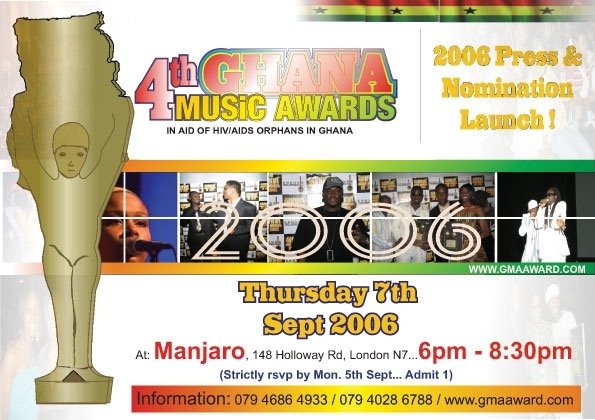 OK. So last night I spent the best part of an evening literally hanging around at hip lifestyle bar Manjaro in North London waiting endlessly for the launch of the Ghana Music Awards (GMA) UK.
  I don’t know what it was that convinced me to pick up No Woman No Cry at my local bookstore one Saturday afternoon in early 2005. Though I’d always been a fan of Bob Marley’s music (who isn’t?) I didn’t know much about the man other than that he was a devout Rastafarian and profound and prolific songwriter. That was enough for me. No Woman No Cry was a complete impulse buy but from the first page to the last I was hooked! Not just on the insights into the life and motivations of the great Bob Marley, but on the story of how his wife Rita survived turbulent times and public heartbreak to stand by her man.
 An increasingly vocal number of Labour MPs believe things can only get better if Tony Blair turns his back on Number 10 once and for all. But for whom?
  It’s not often that you get the chance to visit your home country and experience it objectively, warts and all, but that’s exactly what happened when I visited Ghana recently as a volunteer business advisor. As part of a team of sixteen Resource Persons on the AFFORD Enterprise Mission we were confronted head-on with the pitfalls, frustrations and challenges of doing business in Africa. The Mission, which was sponsored by VSO and in partnership with Barclays Bank, offered a unique opportunity to engage in Ghana’s economic development.
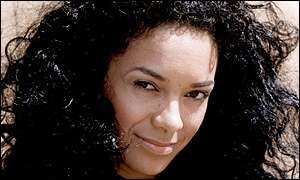 It’s 7pm on a Friday night and while most of us are winding down for the weekend Kanya King, the dynamic founder of the Music Of Black Origin (MOBO) Awards has hours of work ahead of her. But hers is no average nine-to-five. In the weeks running up to the prestigious annual affair, the half-Irish, half-Ghanaian media mogul is juggling calls from the press, the public, artist liaison and show sponsors all at the same limited time. Yet after eleven years of organising the hottest event on the British music calendar King still has a palpable passion for her job.
 In 1986 Shelton "Spike" Lee burst on to the movie scene with his breakthrough film She's Gotta Have It, an intelligent and witty take on black female sexuality that was apt for its time. Lee's characteristic no-holds-barred portrayal of everyday black people heralded not only the start of a beautiful career but signalled the arrival of commercial black cinema. Since the late 1980's, Lee's body of work has comprised of a collection of thought-provoking and socially-conscious films that have chronicled the Black American experience and set the standard for others to follow. Do The Right Thing, Mo' Better Blues, Jungle Fever, Malcolm X, Get On The Bus and He Got Game, to name a few, are black cinematic classics and triumphs over the big studio, big budget system that is symptomatic of the American movie industry.
 .jpg) Essentially a religious symbol then a political statement and now a fashion trend, dreadlocks have experienced a revival on urban streets. From Brixton to Birmingham, ‘locking’ shops are springing up all over the country to cater for the growing demand of black men and women wanting to go natural. Is this a sign of a new black consciousness or a passing trend? Sylvia Arthur finds out.
Essentially a religious symbol then a political statement and now a fashion trend, dreadlocks have experienced a revival on urban streets. From Brixton to Birmingham, ‘locking’ shops are springing up all over the country to cater for the growing demand of black men and women wanting to go natural. Is this a sign of a new black consciousness or a passing trend? Sylvia Arthur finds out. Africa Plays On… was originally released to commemorate Africa’s participation in the 2006 World Cup but the songs on this disc will far outlive the Summer of ‘06. The album’s standout cuts are the opener Please Don’t Stop, a sublime collaboration between US R&B singer John Legend and Cameroonian bassist Richard Bona and the brilliantly epic 2000 Blacks Got To Be Free by Roy Ayers and Fela Kuti. Wahala Project’s Wahala, a groovy slice of Afro-funk also rates an honourable mention. The ubiquitous Akon makes an understated appearance on Amadou and Mariam’s Coulibaly while reggae fans can choose between Alpha Blondy’s rootsy Cocody Rock or Waldemar Bastos’ dancehall-tinged Pitanga Madurinha II. Man of the Moment K’naan shines on Ba Sissoko’s Silani and Osibisa show they haven’t lost any of their old sparkle on Watusi.
 I felt compelled against my better judgement to stay up last night and watch Shoot The Messenger (BBC2, 9pm, Wed, 30/08/06), having been told by many friends that this was definitely watercooler TV. It’s not good to go to bed with an angry mind and I knew that like Channel 4’s The Great British Black Invasion this had the potential to rile me. And indeed it did.
Why did the only ‘normal’ character, Joe’s girlfriend Heather have to have issues? And a weave? This isn’t the ‘60’s. Not every black hairstyle is a political statement. But of course there had to be a deep-rooted reason why she preferred human hair out of a bag to the natural hair on her head. And then the came the sob story … “When I was younger I was lined up with my sisters and put to the back of the line because I was dark and ugly.”
Just when you thought Shoot The Messenger was about to redeem itself, when the lead character Joe implored his girlfriend Heather to, “Sort out the mess on your head and I’ll sort out the mess in mine” you were left disappointed when the film once again descended in to a hyper-critical introspective muddle. While the film’s opening line has been much maligned - “Everything bad that has ever happened to me has involved a black person” – by far the most shocking and damaging dialogue came when Joe concluded that perhaps the reason why black people are obsessed with slavery is because “we were actually good at it. We were productive then.” In an interview in this week’s New Nation newspaper the film’s writer Sharon Foster says black people can’t be afraid to tell the truth. What possible truth can be derived from that statement?
If there was anything good to be taken from this film it was that the directing was slick and the acting was brilliant but that was never in question.
In the end I realised that there was really nothing in this film to get angry about. Shoot The Messenger was supposed to be clever and ironic. Instead it was tacky and submissive. Last night I went to bed content in the knowledge that thankfully I personally don’t know any of the characters portrayed in the film (and no, I don’t live in some backwater in the country). While some may question the truth of this statement I’d prefer instead to question the kind of society that has us believing that every black woman under 30 is an unemployed single mother with four children by four different fathers who will either end up in prison or in the mental health system. And it was then that I realised that I must take this film for what it was – an exaggerated work of fiction. SA.